



How many children suffer from learning disabilities?
In France, an average of 5% of children are currently diagnosed with dyslexia, dyspraxia, dyscalculia, and ADHD. Dysphasia affects 1% of children. According to the Ministry of Solidarity, Autonomy, and Persons with Disabilities, 10% of births are affected by neurodevelopmental disorders.
It is difficult to obtain reliable and truly representative figures despite medical and scientific advances.
Firstly, the diagnoses of DYS, even if they are increasingly made today, are long (since all other possibilities must be eliminated before a DYS disorder can be determined).
Some disorders overlap: dysattentional syndrome can in fact on its own cause or accentuate other DYS disorders.
A dyslexic child will also be dysgraphic, but the reverse is not necessarily true, etc.
Firstly, the diagnoses of DYS, even if they are increasingly made today, are long (since all other possibilities must be eliminated before a DYS disorder can be determined).
Some disorders overlap: dysattentional syndrome can in fact on its own cause or accentuate other DYS disorders.
A dyslexic child will also be dysgraphic, but the reverse is not necessarily true, etc.
Focus on dyslexia
Dyslexia is therefore a language disorder of neurobiological origin. A dyslexic child has difficulty identifying what they read, even if they understand it. If you have any doubts at any point during your child's schooling, don't hesitate to contact qualified professionals who can conduct a multidisciplinary assessment.
Current recommendations for diagnosing dyslexia point to around 18 months of reading acquisition; before that, it is too early to determine whether it is a learning difficulty or true dyslexia. Certain signs in young children can provide clues:
- Difficulty and fatigue when reading, very slow and not very fluid reading;
- Difficulties in identifying and separating the syllables of a word, the words of a sentence, and the sentences themselves.
How to provide support?
Once the diagnosis is made, in addition to the follow-up put in place with one or more qualified health professionals, you can daily use all the media that allow you to tell stories, develop language skills (images, cards, memos, kamishibai, books, etc.), approach mathematics through games of experimentation and logic (e.g. self-correcting Montessori material).
Memory cards help to work on memorization, magnetic and traditional puzzles encourage concentration and eye-hand coordination.
In general, games facilitate essential early diagnosis and have a magical power to encourage the child in the development of all their abilities.
Posted in:
3 - ADHD, DYS and BIPOLARITY
Related products
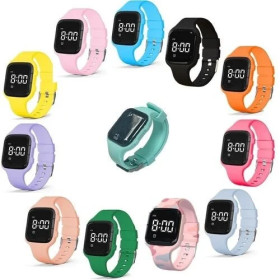
Uriflex - R15 recall watch
Price: €29.99
15 daily vibration alarms
Splash-proof
12-24h format
USB rechargeable
7...
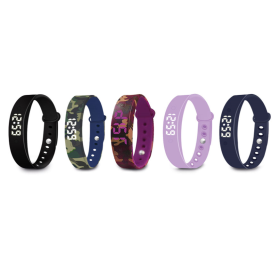
Uriflex - U15 booster watch
Price: €29.99
15 daily alarms
Splash-proof
12-24h format
Mode: Vibration
USB2...





Latest comments