



Washable nappies: An ecological and economical choice?
More than 10 years ago, the founder of had introduced in France washable nappies of the brand Kushies © for children and the brand Freestyle © for adults.
We were at the beginning of the new generation of reusable diapers in France. The main arguments were: environmental friendliness and the savings made by using reusable diapers. It's true that at that time, reusable diapers didn't have the qualities they have today, but their message was more focused on environmental concerns.
Today in 2016, what conclusions can we draw from this?
It's certain that the materials used have changed a lot in 10 years. At the beginning, organic cotton and hemp were used. Now, all quality washable diapers use Lyocel® (Tencel®), bamboo, microfiber, and more recently Zorb® (still very niche).
But the question we can ask ourselves is: Have we lost the ecological spirit in favor of the economy and performance?
The unequivocal answer is yes. It is difficult, if not impossible, to continue promoting environmentalism on products that mothers expect and demand:
- high-performance products with ever-faster absorption and drying speed
- economical products with manufacturing costs reduced to a minimum.
- comfortable products using new generation materials allowing an acceptable thickness-to-absorption/thickness ratio.
The definition of washable diapers for as manufacturer for the Kiddo © brand:
High-performance, practical and economical diapers.
- High-performing because we use highly absorbent materials that can compete with conventional diapers such as Pampers.
- Practical because they dry faster today, absorbency can be increased by adding an insert. We can even create a mattress that keeps you dry by offering microfiber inserts.
For a better understanding of the inserts: Bamboo, Tencel®, Zorb® These materials are highly absorbent but don't provide a "stay-dry" effect. Microfiber, on the other hand, absorbs liquids very quickly ("stay-dry" effect) but doesn't have the same absorbency as bamboo, Tencel®, or Zorb®. Ideally, a bamboo/microfiber insert would be offered. (We are currently in the process of manufacturing one.)
- For the economy, because that's a certainty. Using washable nappies guarantees significant savings. We won't give specific figures like some do, but in practice it works out to two or even three times less expensive

And what about the environment in all of this?
Environmental concerns are important, but we need to adapt our messaging. Producing high-quality washable diapers isn't an environmentally friendly process, and we're fully aware of that. But the real focus on environmental responsibility lies in waste management. The difference between throwing away four or five diapers a day in the regular trash and washing them is clear.
Our conclusion:
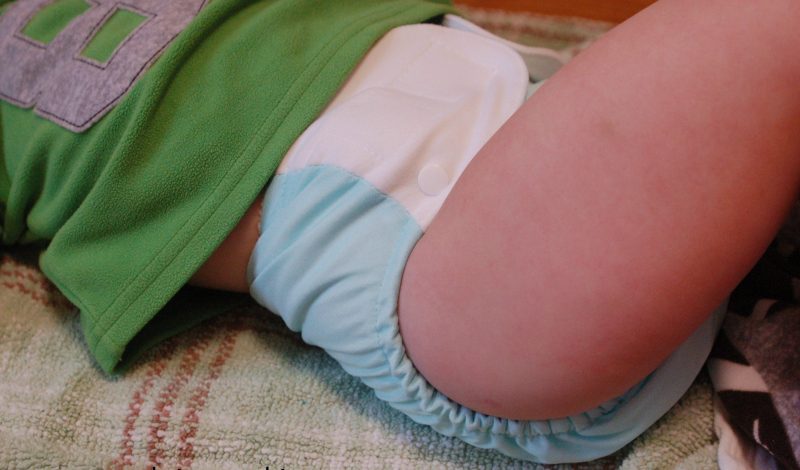
Modern washable diapers are excellent products that rival disposable diapers. The arrival of hybrid diapers proves that it's even easier to combine convenience with affordability.
From an economic standpoint, we completely agree that using cloth diapers is a real money-saver. Furthermore, the look of cloth diapers has greatly improved over the years, to the point of becoming genuine fashion accessories.
From a health perspective, children using washable diapers do not have skin problems like those using disposable diapers.
The icing on the cake: from an ecological point of view: the issue is not to judge their ecological nature during manufacturing, but rather during daily use over several years.





Latest comments