



10 tips for dealing with bedwetting
My child, aged 6 and over, still wets the bed. What are your tips?
This urinary disorder, called enuresis, affects one in ten children (mostly boys) between 5 and 10 years old and about 2% of adolescents.
Is this normal?
Bedwetting is only diagnosed in children aged 5 and older. Before the age of five, doctors consider bedwetting a natural and normal phenomenon that will resolve itself over time.
Did you know that?
This disorder is debilitating for children who may feel hurt or even humiliated, especially when they go on school trips or summer camps. Some even tend to withdraw into themselves.
"Bedwetting" should not be seen by parents as inevitable because this disorder usually disappears quickly.
- If a child wets the bed uncontrollably or unconsciously during sleep, doctors consider this late bedwetting to be an "abnormality" from the age of 5 or 6.
- Or, if the child, who has never been toilet trained, wets the bed day and night , it is primary enuresis. This primary enuresis does not always have a psychological origin.
- If a child who has experienced emotional trauma (divorce, moving, the birth of a sibling, etc.) starts wetting the bed again after being dry for at least six months, this is called secondary enuresis. In this case, it is best to have an evaluation to check for a urinary tract infection or intestinal parasites.
Before putting the advice into practice, it is necessary to understand why a child "wets the bed".
The child produces too much urine at night due to a decrease in their natural antidiuretic hormone during sleep. As a result, the bladder no longer functions as a watertight reservoir. It empties too quickly, refills, and so on... Children may therefore urinate several times without waking up. This is called "overactive bladder," and it is quite possible that these children will experience frequent urges or even urinary incontinence during the day. It is also important to understand the causes. Not all of them have been identified by the medical community. However, it seems that bedwetting is hereditary! The risk is estimated at around 40% if one parent suffers from bedwetting and 60% if both parents have this condition. In the case of primary enuresis, bladder immaturity is often the cause.
Are there any solutions? What should or shouldn't be done?
Here are some practical tips
- Parents should first analyze the reasons to put things into perspective . Their mission is to identify the cause. They should talk to the child, reassure them, and above all, avoid scolding or punishing them, as the child is unaware of the discomfort caused. You can also consult a doctor to rule out any medical cause.
- Mom and Dad need to explain to him how his body works and the reasons for his bladder immaturity.
- If your child is thirsty before bedtime, they should drink. However, they should learn to drink regularly throughout the day and avoid sugary and carbonated drinks, as well as milk after their afternoon snack. These drinks increase the urge to urinate.
- Parents should not wake their child when they are sound asleep (without having urinated) to force them to urinate. This will not solve the problem and could even cause sleep disturbances in the child.
- It is not necessary to change his sheets several times during the night but it is rather preferable to install a plastic sheet or suitable underwear (diapers, pants, panties with insert) for the night.
- The family must help the child to take responsibility . He is, in fact, old enough to change his pajamas in the middle of the night and put them in the laundry basket.
- It is strongly recommended that the child go to the toilet before going to sleep .
- There are bedwetting alarms that activate at the first sign of moisture. If the child agrees, you can install one. The alarm will wake them up, and they can then go to the toilet on their own. This is currently the best treatment method for bedwetting. Treatment can begin from the age of 4.
- Above all, avoid "brainwashing." Your child's urination occurs during sleep; therefore, it is involuntary and uncontrolled: they are not responsible. Making them feel guilty risks undermining the confidence that is essential for the treatment's success. Instead, choose to talk openly with them and have them keep a record of dry and wet nights.
- In all cases, it is important to consult your pediatrician or doctor who should monitor the progress of your child's bedwetting.
Related products
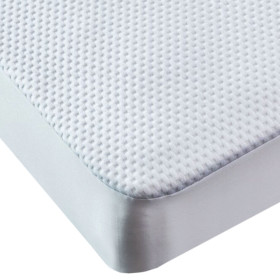
Suprima - Waterproof and absorbent fitted sheet 100 x 200 x 24 cm
Price: €39.90
Tencel® fitted sheet
100% waterproof
Machine washable at 60°c
Tumble dry or...

Uriflex - Waterproof duvet cover
Price: €45.95
Waterproof duvet cover for 1 or 2 people with zip fastening.
Reliable...

Uriflex - 100% waterproof fitted sheet
Price: €18.95
Water-repellent mattress cover (fitted sheet model) available in different...





Latest comments